 Realistic Sketch
Facial features are often the first elements students try to “perfect.” The more useful path is to understand each feature as a three-dimensional form sitting on the larger structure of the head. This tutorial outlines construction and shading approaches you can apply with any solid reference.
Materials
- HB, 2B, 4B graphite pencils
- Medium-tooth drawing paper
- Kneaded eraser and a clean vinyl eraser
- Optional: blending stump used lightly
The Eye
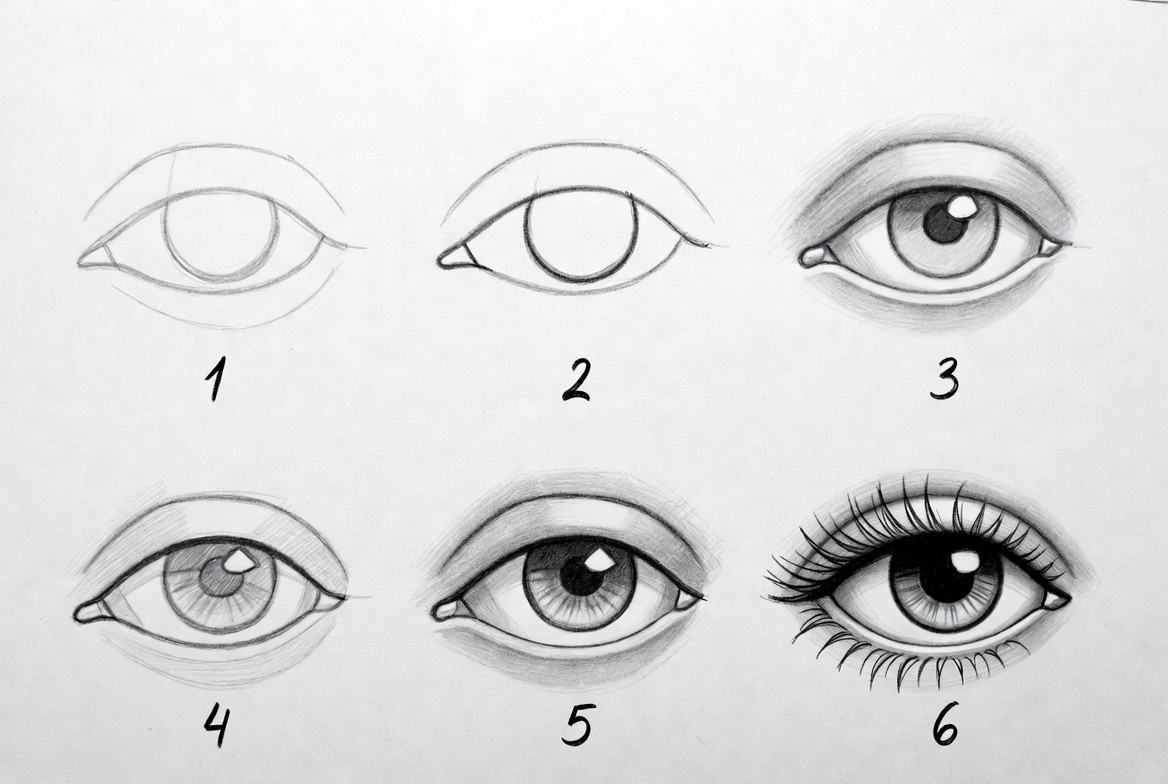
Begin with the overall shape of the eye opening — it is rarely a perfect almond. Note the thickness of the upper and lower lids; the upper lid usually casts a soft shadow onto the eyeball. Place the iris as a circle that is partially covered by the lids. The pupil sits within the iris and is darker still. Leave a sharp highlight (or lift it with a kneaded eraser) to convey moisture. The white of the eye (sclera) is not pure white; it carries soft value changes that describe the spherical form.
The Nose
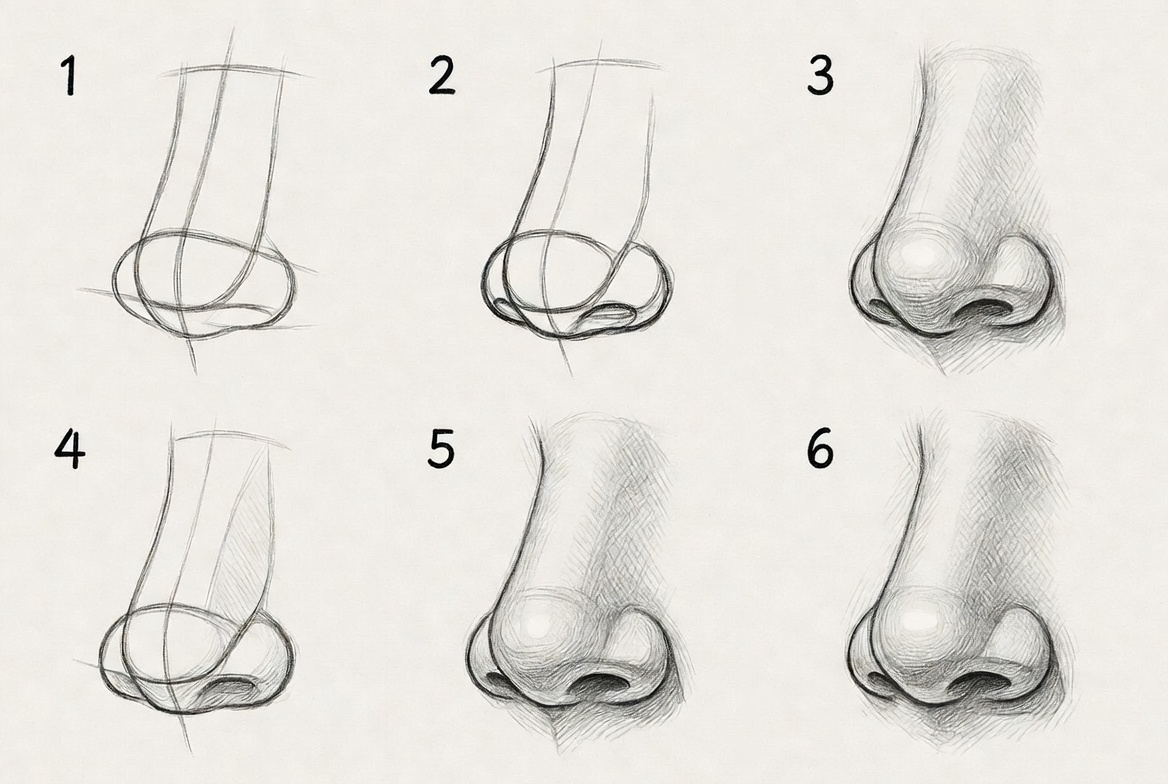
Think of the nose as a series of planes rather than a single outline. The bridge, the ball of the nose, and the wings each catch light differently. Nostrils are dark but not flat black; their edges soften into the surrounding skin. Avoid hard outlines around the entire nose — let value changes describe the form.
Lips
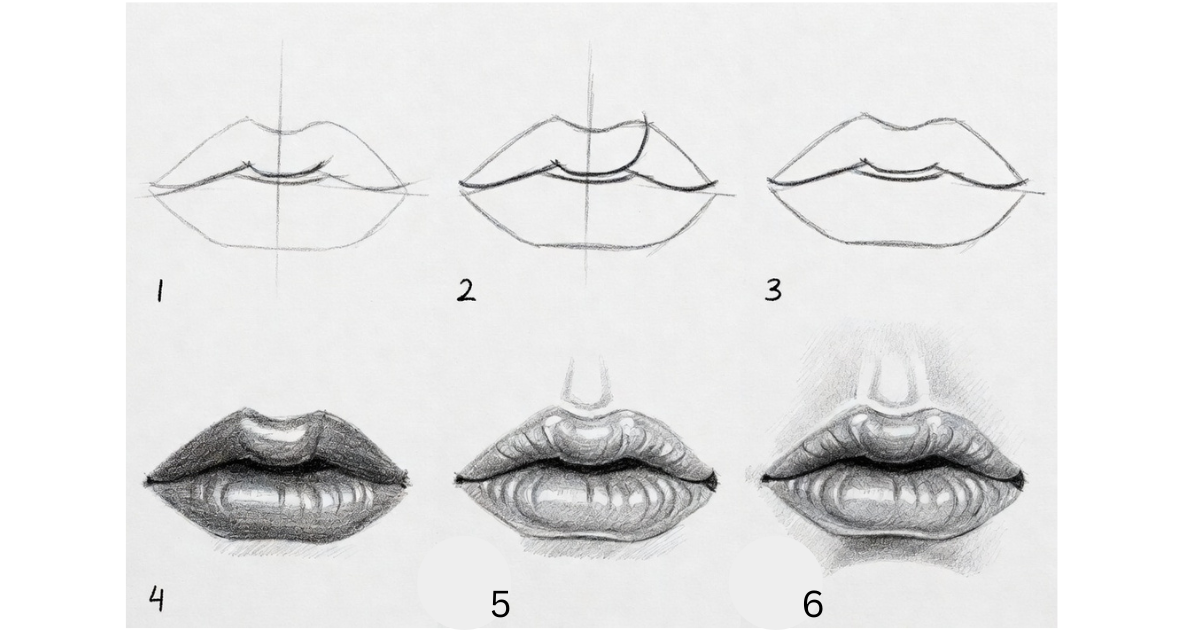
The upper lip is usually slightly darker than the lower because it tilts away from the light. The center line between the lips is soft, not a hard stroke. Pay attention to the philtrum (the vertical groove above the upper lip) and the small planes of the lower lip. Specular highlights on the lower lip help convey moisture.
Ear and Overall Placement
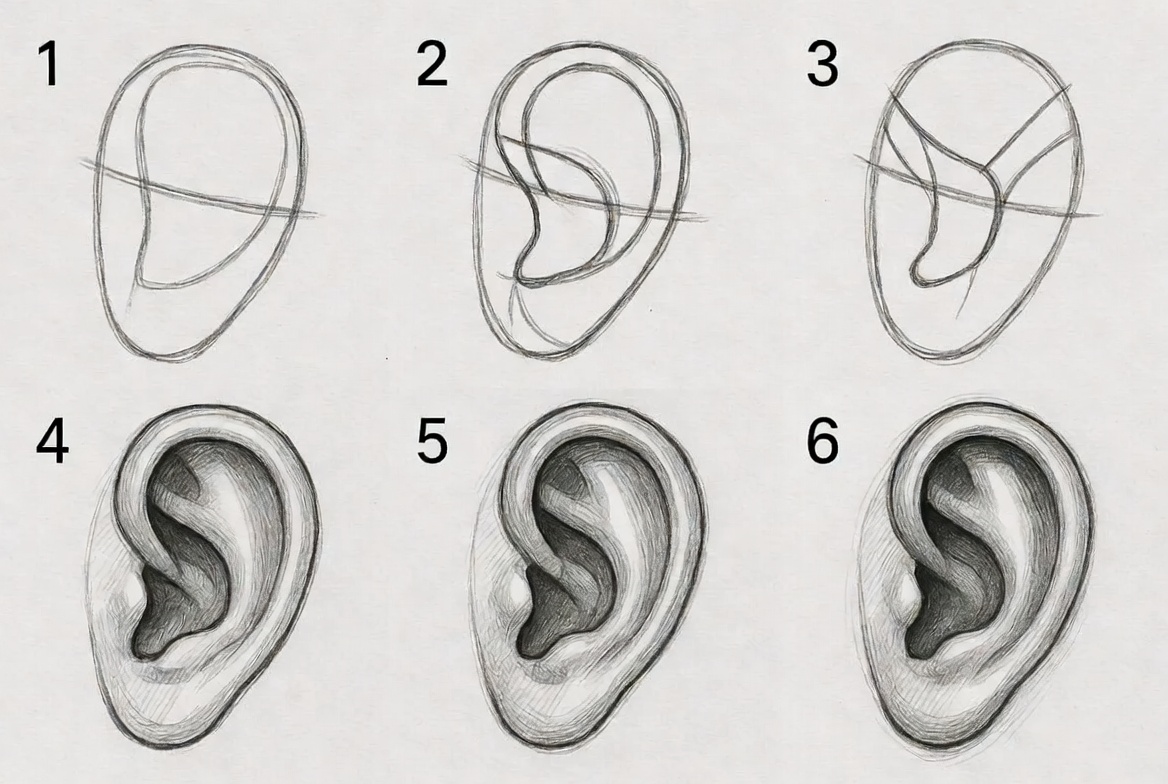
Ears align roughly with the brow line at the top and the base of the nose at the bottom on a frontal view (adjust for perspective). Internal forms of the ear are complex; simplify into major shapes first, then refine. Soften the outer contour so the ear sits naturally against the head.
Putting Features Together
Once individual features feel more solid, practice placing them in correct relationship on the head. The eyes sit approximately halfway down the head. The bottom of the nose is about halfway between the eyes and the chin. The mouth sits roughly one-third of the way from the nose to the chin. These are average proportions — always check your specific reference.
For more portrait examples, visit the Portrait Gallery.